The global wood pellet market is currently in a high-growth phase. In 2025, the global wood pellet market was valued at approximately $17.25 billion, and it is projected to grow to $18.53 billion in 2026, reaching $26 billion by 2031, representing a compound annual growth rate (CAGR) of 7.01%. Other market research institutions corroborate this trend, forecasting a CAGR of between 5.2% and 7.8% from 2026 to 2034.
The core driver of this growth is the global energy transition. Europe currently holds approximately 52% of the market share, but the Asia-Pacific region is the fastest-growing market—Japan and South Korea are significantly increasing their wood pellet imports to meet renewable energy targets. In 2024, the combined consumption of the UK, Japan, and South Korea accounted for 43% of total global consumption. Japan and South Korea have become the most significant consumer markets in the Asia-Pacific region.
Wood pellets play a unique role in the energy transition. Unlike intermittent renewable energy sources such as solar and wind power, wood pellets can provide stable, reliable baseload power. Globally, utility-scale biomass power generation dominates wood pellet demand, and the trend of coal-to-biomass conversion is accelerating across Europe and Asia. Through co-firing technology, power plants can significantly reduce carbon emissions without requiring large-scale infrastructure modifications.
As the world's fastest-growing wood pellet import market, Japan is promoting biomass energy development through its long-term Feed-in Tariff (FIT) scheme, aiming to achieve carbon neutrality by 2050 and reduce greenhouse gas emissions by 46% by 2030. South Korea, meanwhile, mandates that power generation companies procure certified biomass fuels through its Renewable Portfolio Standard (RPS). Combined industrial wood pellet imports for Japan and South Korea are expected to exceed 8 million tons by 2026.
Notably, industrial decarbonization is emerging as a new growth engine. High-energy-consuming industries such as cement, steel, and chemicals are increasingly adopting biomass fuels to reduce emissions, with wood pellets providing a scalable and highly efficient solution for high-temperature industrial processes.
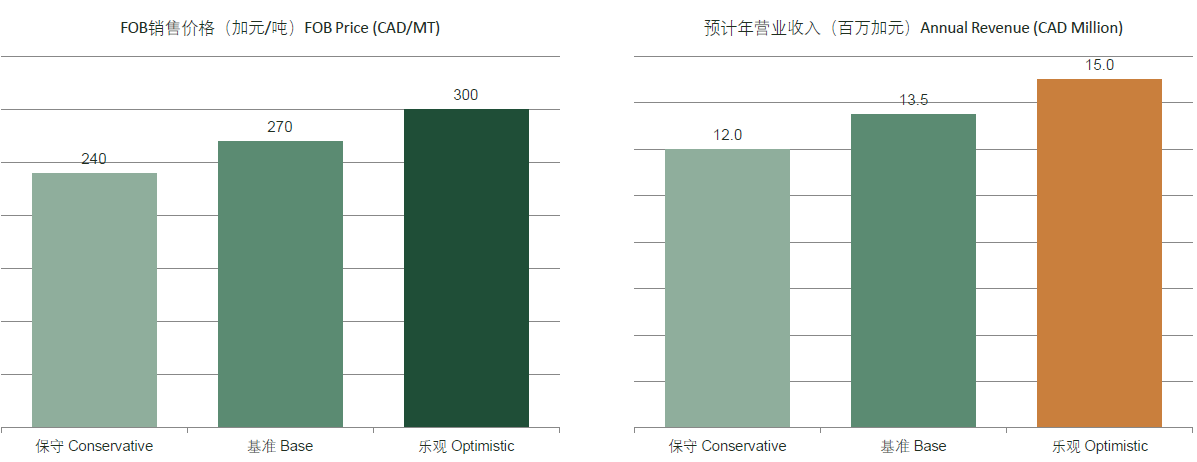
The Fraser River Biomass Wood Pellet project is starting with an annual production capacity of 50,000 metric tons. At a selling price of USD 300 per metric ton, this would generate annual revenue of USD 15 million.
The true highlight of the project lies in its strong scalability. The plan is to expand capacity in phases to 200,000 metric tons per year by Phase 3, at which point annual revenue would grow to USD 60 million—quadruple the initial phase.
Economic analyses indicate that scaling up production can significantly improve financial performance, with net income potentially increasing by up to 20% and the payback period shortened to approximately 10 years.