Wood Pellet Porcess
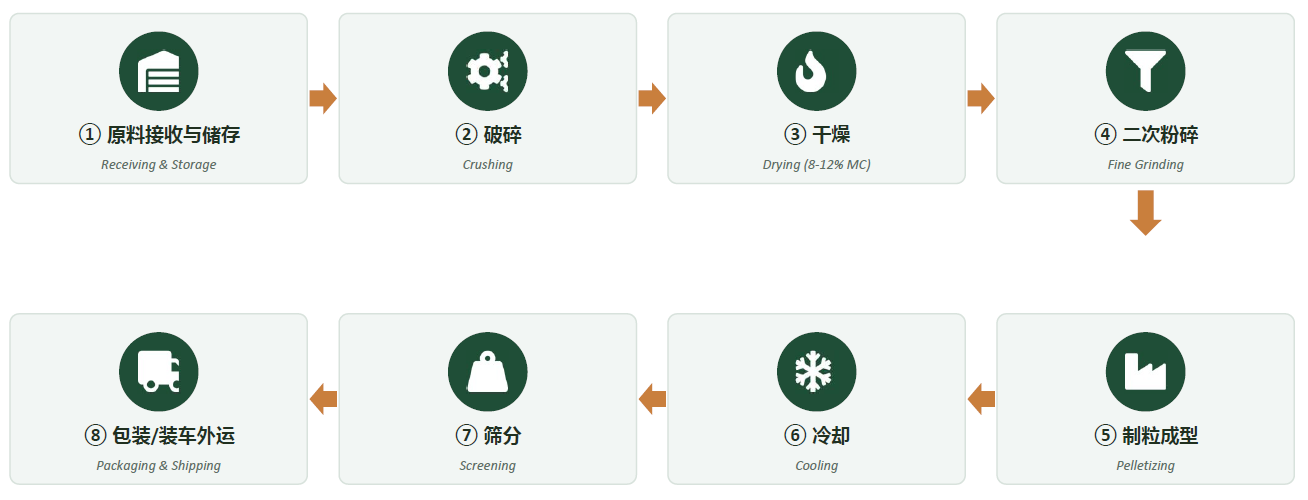
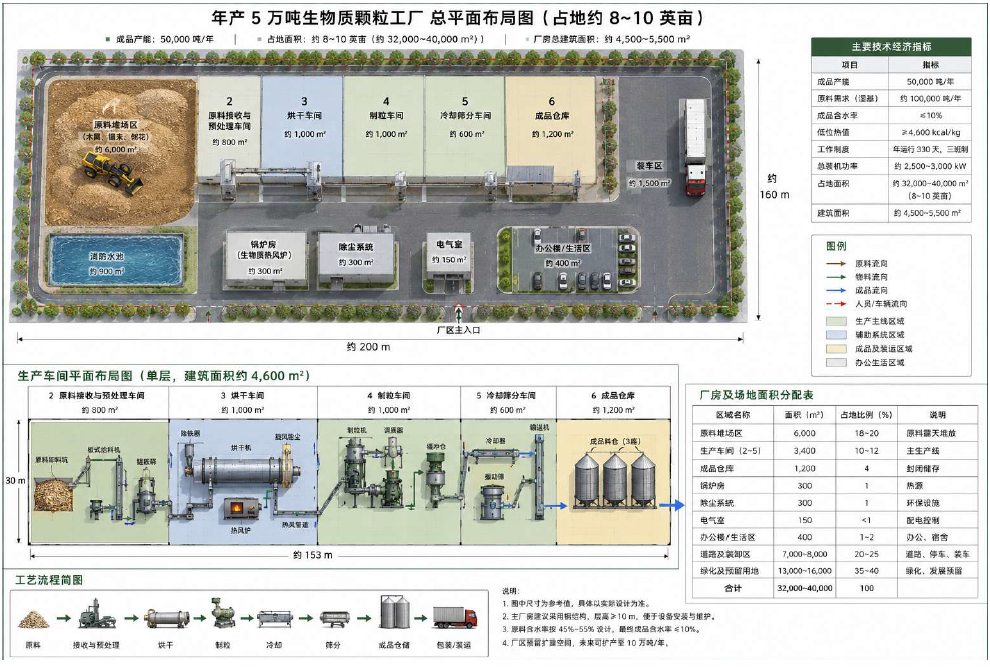
The process involves several key stages: preparing the raw material, drying it, grinding it into a fine powder, and then compressing this powder under high pressure to form pellets.
Key Technical Factors
Several variables are critical to the efficiency and quality of the final product:
- Moisture Content: Too much or too little moisture can negatively affect the process. Optimum levels are typically between 8-15%.
- Temperature: The high temperatures generated during pelletizing are essential for melting the lignin, which acts as the natural binder.
- Pressure: High pressure is needed to overcome the material's resistance and achieve the required density.
- Raw Material: Different wood species behave differently. For example, beech requires more energy to pelletize than pine but produces stronger pellets.
- Quality Standards: The industry has strict quality standards. The ENplus certification is a leading global standard for wood pellets. For example, the highest grade, ENplus A1, permits a maximum ash content of only 0.7% and requires a mechanical durability of ≥ 98.0%.